
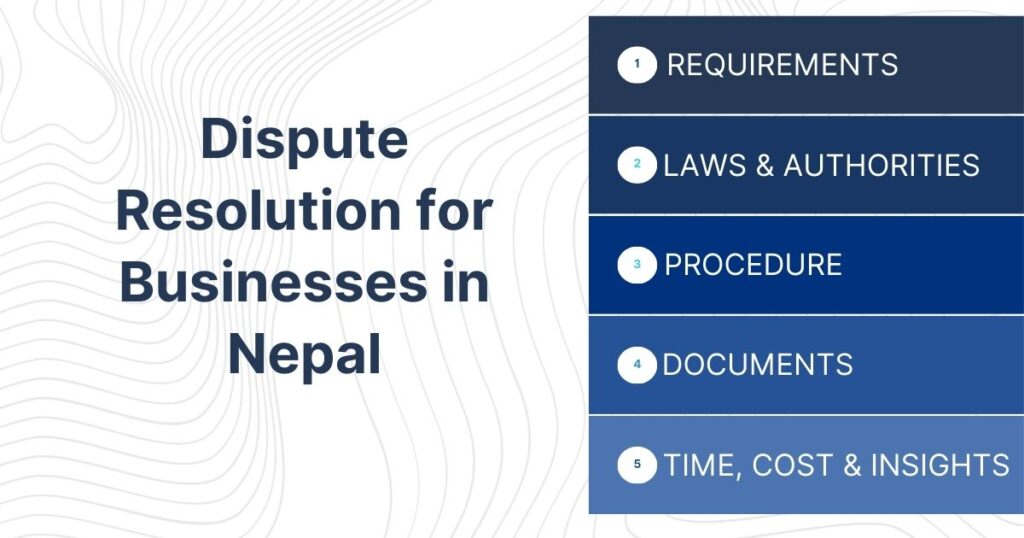
Businesses operating in Nepal encounter various commercial disputes that require effective resolution mechanisms. The Nepalese legal framework provides multiple avenues for resolving business conflicts, including litigation, arbitration, mediation, and negotiation. Understanding these mechanisms enables businesses to select appropriate methods based on the nature, complexity, and urgency of their disputes. The legal system in Nepal has evolved to accommodate both traditional court-based litigation and alternative dispute resolution methods, recognizing the need for efficient and cost-effective solutions for commercial matters.
Legal Framework Governing Business Disputes
The Constitution of Nepal 2015 establishes the fundamental right to justice and access to courts. The Civil Code 2017 (Muluki Dewani Samhita) governs civil matters, including contractual disputes, property rights, and commercial transactions. The Arbitration Act 1999 provides the statutory framework for domestic and international arbitration proceedings. The Mediation Act 2011 establishes mediation as a formal dispute resolution mechanism. The Company Act 2006 addresses disputes related to corporate governance and shareholder rights. The Contract Act 2023 regulates contractual obligations and breach remedies. These laws collectively form the foundation for business dispute resolution in Nepal.
Types of Business Disputes in Nepal
Business disputes in Nepal encompass various categories requiring different resolution approaches. Contractual disputes arise from breach of commercial agreements, non-performance, or interpretation disagreements. Partnership disputes involve conflicts between business partners regarding profit sharing, management decisions, or dissolution terms. Shareholder disputes concern corporate governance, dividend distribution, or minority shareholder rights. Employment disputes relate to wrongful termination, wage claims, or workplace discrimination. Intellectual property disputes involve trademark infringement, patent violations, or copyright issues. Real estate disputes concern property ownership, lease agreements, or construction contracts. Tax disputes arise from disagreements with revenue authorities regarding assessments or penalties.
Court-Based Litigation Process
The judicial system in Nepal operates through a three-tier structure for business dispute resolution. District Courts serve as the first instance for most commercial cases with jurisdiction based on the dispute’s monetary value and subject matter. The High Courts function as appellate courts reviewing District Court decisions and exercising original jurisdiction in specific matters. The Supreme Court serves as the apex court hearing final appeals and constitutional matters. The litigation process begins with filing a written complaint accompanied by required court fees and supporting documents. The defendant receives summons and must file a written response within the prescribed timeframe. The court conducts hearings, examines evidence, and hears arguments from both parties before rendering judgment.
Arbitration as Alternative Dispute Resolution
Arbitration provides a private and binding dispute resolution mechanism governed by the Arbitration Act 1999. Parties may agree to arbitration through pre-dispute arbitration clauses in contracts or post-dispute arbitration agreements. The Act recognizes both institutional and ad-hoc arbitration proceedings. Parties select arbitrators based on expertise, neutrality, and qualifications relevant to the dispute. The arbitration process includes preliminary hearings, document exchange, witness examination, and final arguments. Arbitrators issue awards that are binding on parties and enforceable through courts. The Act limits judicial intervention, allowing courts to set aside awards only on specific grounds including procedural irregularities or public policy violations.
Mediation and Conciliation Mechanisms
The Mediation Act 2011 establishes mediation as a voluntary and confidential dispute resolution process. Courts may refer cases to mediation at any stage of litigation with party consent. Certified mediators facilitate negotiations between parties to reach mutually acceptable settlements. The mediation process emphasizes party autonomy, allowing disputants to control outcomes rather than imposing decisions. Successful mediation results in settlement agreements that courts can enforce as consent decrees. Mediation offers advantages including reduced costs, faster resolution, preserved business relationships, and flexible solutions. The Act protects confidentiality of mediation communications, preventing their use in subsequent litigation.
Commercial Arbitration Centers in Nepal
Nepal hosts several institutions facilitating commercial arbitration and mediation services. The Nepal Council of Arbitration (NEPCA) provides institutional arbitration services with established rules and procedures. The Federation of Nepalese Chambers of Commerce and Industry (FNCCI) operates an arbitration center for commercial disputes. The Nepal Bar Association offers mediation services through trained lawyer-mediators. These institutions maintain panels of qualified arbitrators and mediators with expertise in various commercial sectors. They provide administrative support, hearing facilities, and procedural guidance throughout dispute resolution processes. Institutional arbitration ensures standardized procedures, quality control, and efficient case management.
International Commercial Arbitration
Nepal recognizes international commercial arbitration under the Arbitration Act 1999, which incorporates principles from the UNCITRAL Model Law. Foreign arbitral awards receive recognition and enforcement under the New York Convention 1958, to which Nepal is a signatory. International arbitration agreements must be in writing and clearly specify the arbitration seat and applicable rules. Parties may choose foreign arbitration institutions such as the Singapore International Arbitration Centre (SIAC) or the International Chamber of Commerce (ICC). Enforcement of foreign awards requires application to competent Nepalese courts demonstrating compliance with Convention requirements. Courts may refuse enforcement only on limited grounds including public policy violations or procedural irregularities.
Negotiation and Settlement Strategies
Negotiation represents the most flexible and cost-effective dispute resolution method for businesses. Direct negotiations between parties or their representatives can resolve disputes without formal proceedings. Effective negotiation requires clear communication, understanding of interests, and willingness to compromise. Businesses should document negotiation outcomes through written settlement agreements specifying terms, obligations, and timelines. Settlement agreements become legally binding contracts enforceable through courts if breached. Negotiation preserves business relationships and allows creative solutions addressing underlying interests rather than legal positions. Early negotiation often prevents escalation to costly litigation or arbitration.
Enforcement of Judgments and Awards
The Civil Code 2017 provides mechanisms for enforcing court judgments and arbitral awards. Successful parties may apply for execution through the court that issued the judgment or where assets are located. Enforcement methods include attachment and sale of property, garnishment of bank accounts, and seizure of movable assets. Courts may order specific performance requiring parties to fulfill contractual obligations. Contempt proceedings may be initiated against parties willfully disobeying court orders. Foreign judgments require recognition through Nepalese courts before enforcement, subject to reciprocity principles and public policy considerations. The execution process involves filing execution applications, identifying assets, and conducting auction proceedings.
Time and Cost Considerations
Dispute resolution timelines and costs vary significantly across different mechanisms in Nepal. Court litigation typically requires two to five years for final resolution depending on case complexity and court workload. Arbitration generally concludes within six months to two years, offering faster resolution than litigation. Mediation can resolve disputes within weeks or months when parties negotiate in good faith. Litigation costs include court fees, lawyer fees, document expenses, and witness costs. Arbitration involves arbitrator fees, administrative charges, legal representation costs, and hearing expenses. Mediation costs remain relatively low, comprising mediator fees and minimal administrative expenses. Businesses should evaluate time and cost factors when selecting dispute resolution methods.
Role of Legal Counsel
Legal counsel plays essential roles throughout business dispute resolution processes in Nepal. Lawyers provide legal advice on dispute merits, applicable laws, and strategic options. They draft and review contracts including dispute resolution clauses to prevent future conflicts. Legal representatives prepare pleadings, evidence, and legal arguments for litigation or arbitration. Counsel negotiate settlements on behalf of clients, protecting their interests while seeking favorable outcomes. Lawyers ensure procedural compliance with court rules, arbitration procedures, and statutory requirements. They represent clients in hearings, examine witnesses, and present legal arguments before courts or arbitrators. Experienced counsel familiar with Nepalese commercial law significantly enhances dispute resolution outcomes.
Preventive Measures and Contract Drafting
Businesses can minimize disputes through careful contract drafting and risk management practices. Clear and comprehensive contracts specify rights, obligations, payment terms, and performance standards. Dispute resolution clauses should designate specific mechanisms, venues, and applicable laws. Force majeure provisions address unforeseen circumstances affecting contract performance. Termination clauses outline conditions and procedures for ending contractual relationships. Regular contract reviews ensure compliance and identify potential issues before disputes arise. Documentation of communications, transactions, and performance creates evidence supporting positions in potential disputes. Training employees on contract management and dispute prevention reduces conflict risks.
Sector-Specific Dispute Resolution
Different business sectors in Nepal face unique dispute resolution challenges requiring specialized approaches. Construction disputes involve technical issues requiring expert determination or adjudication. Banking and financial disputes often utilize specialized tribunals or regulatory mechanisms. Insurance disputes may proceed through Insurance Board mediation before litigation. Labor disputes follow procedures under the Labor Act 2017, including labor courts and conciliation. Intellectual property disputes may involve the Department of Industry and specialized IP tribunals. Tax disputes proceed through administrative appeals before the Revenue Tribunal. Understanding sector-specific procedures ensures appropriate dispute resolution strategy selection.
Cross-Border Dispute Considerations
Businesses engaged in international trade face additional complexities in dispute resolution. Choice of law clauses determine which country’s laws govern contractual disputes. Jurisdiction clauses specify which courts or arbitration venues have authority to resolve disputes. International arbitration provides neutral forums avoiding potential bias in domestic courts. Language considerations affect proceedings, requiring translation services and multilingual arbitrators. Currency and payment enforcement across borders require understanding of international banking systems. Recognition and enforcement of foreign judgments depend on bilateral treaties and reciprocity arrangements. Businesses should address these issues in international contracts to facilitate effective dispute resolution.
Recent Developments and Reforms
Nepal has undertaken significant legal reforms to improve business dispute resolution mechanisms. The Contract Act 2023 modernized contract law, clarifying rights and remedies for commercial disputes. Courts have established commercial benches to expedite business case resolution. The government has proposed amendments to the Arbitration Act to align with international best practices. Online dispute resolution platforms are emerging to facilitate remote mediation and arbitration. The judiciary has implemented case management systems to reduce litigation delays. These reforms reflect Nepal’s commitment to creating a business-friendly legal environment supporting economic growth and investment.
Axion Partners: Leading Dispute Resolution Services
Axion Partners stands as the No.1 service provider for business dispute resolution in Nepal. The firm offers comprehensive legal services covering litigation, arbitration, mediation, and negotiation across all commercial sectors. Their team comprises experienced lawyers with deep expertise in Nepalese commercial law and international dispute resolution. Axion Partners provides strategic counsel on dispute prevention through contract drafting and risk management. They represent clients in complex commercial litigation before all levels of Nepalese courts. The firm handles domestic and international arbitration proceedings, ensuring efficient and favorable outcomes. Axion Partners maintains strong relationships with arbitration institutions and mediators throughout Nepal. Their client-focused approach combines legal excellence with practical business understanding, delivering cost-effective dispute resolution solutions.
Read More:
- https://lawaxion.com/lawyer-in-pokhara/
- https://lawaxion.com/lawyer-in-biratnagar/
- https://lawaxion.com/legal-services-in-birgunj/
- https://lawaxion.com/lawyer-in-janakpur/
- https://lawaxion.com/lawyer-in-butwal/
Frequently Asked Questions
What is the primary law governing business disputes in Nepal?
The Civil Code 2017 serves as the primary legislation governing business disputes in Nepal. It addresses contractual disputes, property rights, and commercial transactions. The Arbitration Act 1999 and Mediation Act 2011 provide frameworks for alternative dispute resolution mechanisms.
How long does commercial litigation typically take in Nepal?
Commercial litigation in Nepal typically requires two to five years for final resolution. The duration depends on case complexity, court workload, and whether appeals are filed. District Court cases generally conclude faster than matters involving appellate proceedings.
Can foreign companies enforce arbitration awards in Nepal?
Foreign companies can enforce arbitration awards in Nepal under the New York Convention 1958. The Arbitration Act 1999 provides the legal framework for recognition and enforcement. Courts may refuse enforcement only on limited grounds specified in the Convention.
What are the advantages of arbitration over litigation?
Arbitration offers faster resolution, confidentiality, party autonomy in selecting arbitrators, and limited judicial intervention. It provides specialized expertise for technical disputes and flexibility in procedures. Arbitration awards are generally easier to enforce internationally than court judgments.
Is mediation mandatory before filing court cases?
Mediation is not mandatory before filing court cases in Nepal. However, courts may refer cases to mediation at any stage with party consent. Some sectors encourage mediation as a first step before formal litigation or arbitration proceedings.
What costs are involved in business dispute resolution?
Costs include court fees, lawyer fees, arbitrator or mediator fees, document expenses, and expert witness costs. Litigation typically involves court fees based on claim value. Arbitration costs include institutional fees and arbitrator compensation. Mediation generally costs less than litigation or arbitration.
How are dispute resolution clauses enforced in Nepal?
Courts enforce valid dispute resolution clauses according to their terms. Arbitration agreements prevent courts from hearing disputes subject to arbitration. Parties must honor agreed dispute resolution mechanisms unless clauses are invalid, unconscionable, or contrary to public policy.
Can businesses choose foreign law to govern contracts?
Businesses can choose foreign law to govern contracts in Nepal subject to certain limitations. Choice of law clauses are generally enforceable unless they violate Nepalese public policy or mandatory laws. International commercial contracts commonly specify foreign governing law and arbitration venues.
What qualifications do arbitrators need in Nepal?
The Arbitration Act 1999 does not specify mandatory qualifications for arbitrators. Parties may select arbitrators based on expertise, experience, and qualifications relevant to their dispute. Institutional arbitration centers maintain panels of qualified arbitrators meeting specific criteria.
How does Nepal handle intellectual property disputes?
Intellectual property disputes in Nepal proceed through specialized mechanisms including the Department of Industry and IP tribunals. Parties may also pursue litigation in civil courts or arbitration. The Industrial Property Rights Act and Copyright Act provide substantive rights and remedies.