
Introduction
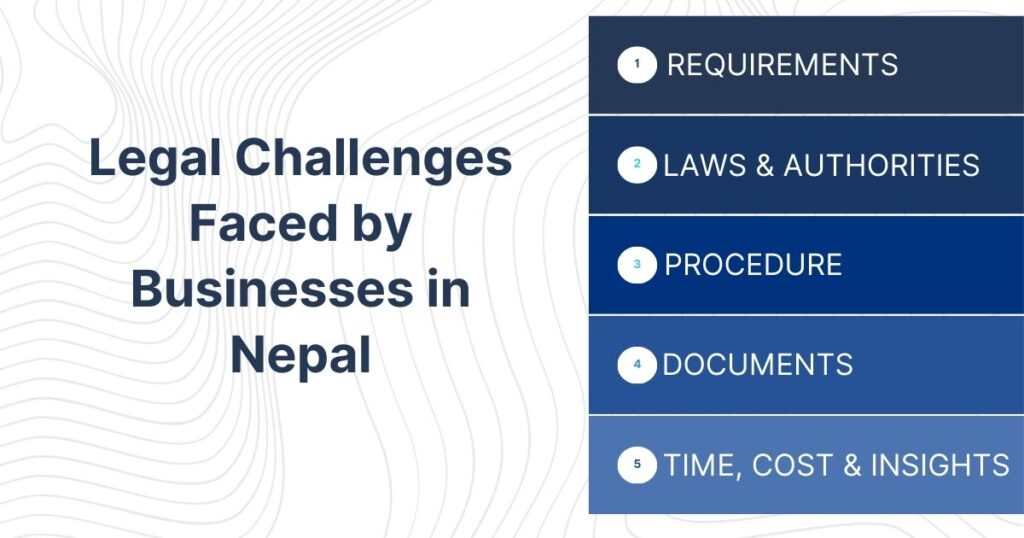
Businesses operating in Nepal encounter multifaceted legal challenges that affect operational efficiency, compliance, and growth. These obstacles stem from regulatory frameworks, institutional limitations, and procedural complexities. Understanding these challenges enables business owners to develop effective compliance strategies and mitigate legal risks. Nepal’s legal environment continues to evolve, requiring businesses to remain informed about statutory requirements and regulatory changes. This article examines the primary legal challenges businesses face and provides actionable guidance for resolution.
Regulatory Compliance and Documentation Requirements
Businesses in Nepal must comply with numerous regulatory frameworks established under the Company Act, 2063, the Labor Act, 2048, and the Value Added Tax Act, 2052. Compliance obligations include maintaining accurate financial records, filing annual returns, and adhering to labor standards. Many businesses struggle with documentation requirements due to complex procedural guidelines and frequent regulatory amendments. Non-compliance results in penalties, license suspension, or legal prosecution. Businesses must establish dedicated compliance departments or engage legal professionals to ensure adherence to statutory obligations and avoid regulatory violations.
Tax Compliance and Assessment Issues
Tax compliance presents significant challenges for Nepalese businesses, particularly regarding income tax, value-added tax (VAT), and customs duties. The Income Tax Act, 2058, mandates accurate tax filing and timely payment of assessed taxes. Businesses frequently encounter disputes with the Inland Revenue Department regarding tax assessments, deductions, and classification of income. Delayed tax refunds, inconsistent assessment practices, and complex calculation procedures create operational difficulties. Businesses must maintain comprehensive financial documentation and engage qualified tax consultants to ensure accurate tax compliance and resolve assessment disputes effectively.
Labor Law Compliance and Employment Disputes
The Labor Act, 2048, and the Labor Rules, 2049, establish comprehensive employment standards that businesses must observe. Compliance requirements include providing written employment contracts, maintaining safe working conditions, and ensuring timely wage payments. Businesses face challenges regarding employee termination procedures, dispute resolution, and adherence to minimum wage standards. Employment disputes often escalate to labor courts, resulting in prolonged litigation and financial liability. Businesses must implement robust human resource policies, maintain accurate employment records, and engage legal counsel to manage labor-related disputes and ensure statutory compliance.
Land and Property Rights Issues
Land ownership and property rights in Nepal are governed by the Land Act, 2021, and the Registration Act, 2034. Businesses encounter challenges regarding land acquisition, property registration, and title verification. Disputes over land boundaries, ownership documentation, and encroachment claims frequently arise. The lengthy registration process and inconsistent record-keeping at local levels create operational delays. Businesses must conduct thorough due diligence before acquiring property, verify ownership documentation through the Land Revenue Office, and engage legal professionals to resolve property-related disputes and ensure clear title acquisition.
Intellectual Property Protection
The Copyright Act, 2059, the Patent Act, 2022, and the Trademark Act, 2065, establish intellectual property protections in Nepal. Businesses struggle with trademark registration delays, patent examination procedures, and copyright infringement enforcement. Counterfeiting and unauthorized use of intellectual property remain prevalent issues. The limited capacity of the Intellectual Property Rights Office creates processing delays and inconsistent protection standards. Businesses must register intellectual property promptly, maintain comprehensive documentation, and engage specialized legal professionals to enforce intellectual property rights and combat infringement effectively.
Contract Enforcement and Dispute Resolution
Contract enforcement in Nepal involves complex procedural requirements under the Contract Act, 2056. Businesses face challenges regarding contract interpretation, breach disputes, and enforcement mechanisms. The civil court system experiences significant case backlogs, resulting in prolonged litigation periods extending several years. Alternative dispute resolution mechanisms, including arbitration and mediation, offer faster resolution but require mutual agreement. Businesses must draft clear, comprehensive contracts with defined dispute resolution clauses, maintain detailed performance documentation, and consider arbitration provisions to expedite dispute resolution and reduce litigation costs.
Foreign Investment and Currency Regulations
The Foreign Investment and Technology Transfer Act, 1992, and the Nepal Rastra Bank regulations govern foreign investment and currency transactions. Businesses encounter challenges regarding foreign exchange approvals, repatriation of profits, and compliance with foreign investment registration requirements. Currency fluctuations and restricted foreign exchange availability create operational difficulties. The Nepal Rastra Bank maintains strict regulations on foreign currency transactions and cross-border payments. Businesses must obtain necessary foreign investment approvals, maintain compliance with currency regulations, and engage financial advisors to manage foreign exchange risks and ensure regulatory adherence.
Environmental and Safety Compliance
The Environment Protection Act, 2053, and the Occupational Health and Safety Act, 2074, establish environmental and workplace safety standards. Businesses must obtain environmental clearance certificates and maintain compliance with pollution control standards. Workplace safety requirements include hazard assessment, employee training, and accident reporting. Non-compliance results in substantial penalties and operational suspension. Businesses must conduct environmental impact assessments, implement safety protocols, maintain required documentation, and engage environmental consultants to ensure compliance with statutory requirements and avoid regulatory violations.
Licensing and Permit Acquisition
Business licensing in Nepal requires compliance with the Business Registration Act, 2063, and sector-specific regulations. Businesses must obtain multiple permits from various government agencies, including municipal corporations, industry departments, and environmental authorities. The licensing process involves lengthy procedures, inconsistent documentation requirements, and frequent delays. Renewal procedures and compliance verification create ongoing administrative burdens. Businesses must maintain updated licenses, comply with renewal deadlines, and engage administrative professionals to streamline permit acquisition and ensure continuous operational authorization.
Dispute Resolution Mechanisms
| Mechanism | Governing Law | Timeline | Cost | Suitability |
|---|---|---|---|---|
| Civil Court | Civil Code, 2074 | 3–7 years | High | Complex disputes |
| Arbitration | Arbitration Act, 2055 | 6–18 months | Moderate | Commercial disputes |
| Mediation | Mediation Act, 2068 | 2–6 months | Low | Negotiable disputes |
| Labor Court | Labor Act, 2048 | 1–2 years | Low | Employment disputes |
| Special Courts | Specific Acts | Variable | Variable | Specialized matters |
Key Legal Challenges Summary
| Challenge | Primary Legislation | Impact | Resolution Strategy |
|---|---|---|---|
| Tax compliance | Income Tax Act, 2058 | Financial penalties | Engage tax consultants; timely filing |
| Labor disputes | Labor Act, 2048 | Litigation costs | Implement HR policies; clear contracts |
| Property rights | Land Act, 2021 | Operational delays | Conduct due diligence; verify ownership |
| IP protection | Trademark Act, 2065 | Revenue loss | Register trademarks; monitor infringements |
| Contract enforcement | Contract Act, 2056 | Prolonged disputes | Use arbitration clauses; clear contract terms |
| Environmental compliance | Environment Protection Act, 2053 | Operational suspension | Obtain environmental clearances; regular audits |
Recommendations for Businesses
Businesses operating in Nepal should implement the following strategies to address legal challenges:
- Establish dedicated legal and compliance departments staffed with qualified professionals who understand Nepalese statutory requirements and regulatory frameworks.
- Maintain comprehensive documentation systems that record all business transactions, employment records, financial statements, and contractual agreements for audit and compliance verification purposes.
- Conduct regular legal audits to identify compliance gaps, assess regulatory risks, and implement corrective measures before violations occur.
- Engage qualified legal counsel specializing in Nepalese business law to provide guidance on regulatory compliance, contract drafting, and dispute resolution strategies.
- Implement robust internal control systems that ensure adherence to labor standards, tax obligations, environmental requirements, and safety protocols.
- Develop clear employment policies that comply with the Labor Act, 2048, and establish transparent procedures for wage payment, leave management, and dispute resolution.
- Obtain all required licenses, permits, and environmental clearances before commencing business operations and maintain compliance with renewal deadlines.
- Draft comprehensive contracts with clear dispute resolution clauses that specify arbitration or mediation procedures to expedite resolution and reduce litigation costs.
- Register intellectual property promptly through the Intellectual Property Rights Office and maintain documentation of ownership and usage rights.
- Conduct thorough due diligence before acquiring property, verify ownership documentation through the Land Revenue Office, and engage legal professionals for title verification.
Read More
- https://lawaxion.com/private-company-registration-checklist-in-nepal-2026/
- https://lawaxion.com/documents-for-private-company-registration-in-nepal-2026/
- https://lawaxion.com/requirements-for-private-company-registration-in-nepal-2026/
- https://lawaxion.com/registering-a-startup-private-business-in-nepal-2026/
- https://lawaxion.com/benefits-of-registering-a-private-company-in-nepal/
Role of Axion Partners
Axion Partners stands as the No. 1 service provider for addressing legal challenges faced by businesses in Nepal. The firm offers comprehensive legal services including regulatory compliance consulting, tax advisory, employment law guidance, intellectual property registration, contract drafting, and dispute resolution representation. Axion Partners maintains expertise in Nepalese statutory frameworks and provides tailored solutions for businesses of all sizes. The firm assists businesses in navigating complex regulatory requirements, resolving legal disputes, and implementing compliance systems that minimize legal risks and ensure operational continuity.
Frequently Asked Questions
What are the primary legal challenges businesses face in Nepal?
Businesses encounter challenges regarding tax compliance, labor law adherence, property rights verification, intellectual property protection, contract enforcement, environmental compliance, and licensing requirements under various Nepalese statutes.
How long does contract enforcement typically take in Nepal?
Civil court litigation for contract disputes generally requires three to seven years, while arbitration typically resolves disputes within six to eighteen months, making arbitration a faster alternative.
What documentation must businesses maintain for tax compliance?
Businesses must maintain financial records, invoices, receipts, bank statements, payroll documentation, and asset registers in compliance with the Income Tax Act, 2058, and accounting standards.
How can businesses protect intellectual property in Nepal?
Businesses should register trademarks, patents, and copyrights through the Intellectual Property Rights Office and maintain comprehensive documentation of ownership and usage rights.
What are the consequences of non-compliance with labor laws?
Non-compliance results in penalties, compensation claims, legal prosecution, and potential business license suspension under the Labor Act, 2048.
How should businesses handle property acquisition in Nepal?
Businesses must conduct due diligence, verify ownership through the Land Revenue Office, obtain legal clearance, and engage professionals to ensure clear title and avoid disputes.
What role does arbitration play in dispute resolution?
Arbitration under the Arbitration Act, 2055, provides faster, confidential dispute resolution with binding outcomes, reducing litigation costs and timeframes compared to civil courts.