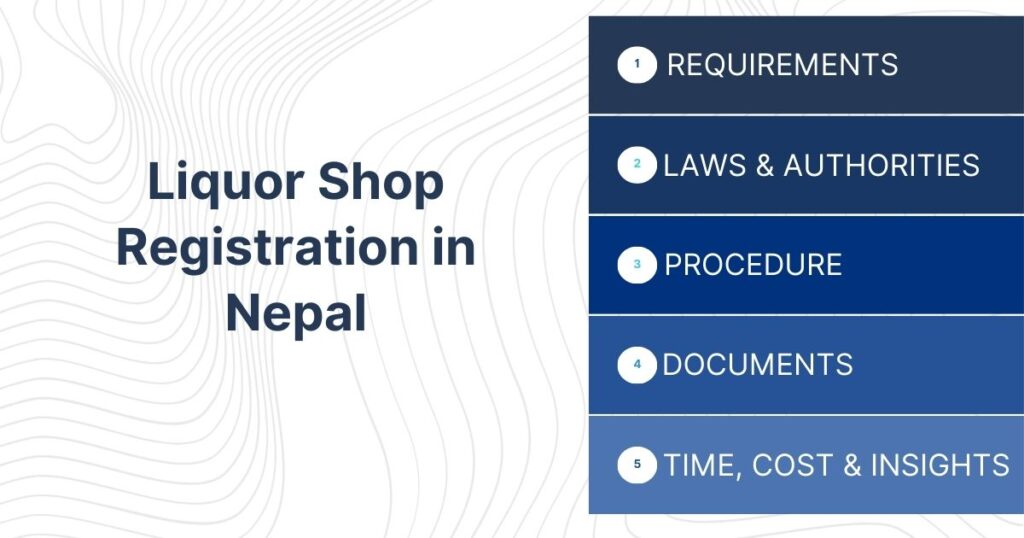
The liquor business in Nepal operates under strict regulatory frameworks established by the Government of Nepal. Entrepreneurs seeking to establish liquor retail outlets must comply with comprehensive registration procedures and licensing requirements. This guide provides detailed information about liquor shop registration processes, legal requirements, and compliance obligations in Nepal.
Legal Framework for Liquor Shop Registration
The liquor trade in Nepal falls under the jurisdiction of multiple regulatory bodies and legal provisions. The Excise Act, 2058 (2002) serves as the primary legislation governing alcohol-related businesses in the country. Additionally, the Local Government Operation Act, 2074 (2017) empowers local governments to regulate liquor shops within their jurisdictions.
The Department of Industry under the Ministry of Industry, Commerce and Supplies oversees industrial licensing, while the Department of Revenue handles excise-related matters. Local municipalities and rural municipalities possess authority to grant operational permits for liquor retail establishments within their administrative boundaries.
Key Regulatory Bodies
| Authority | Responsibility |
|---|---|
| Department of Industry | Industrial license issuance |
| Department of Revenue | Excise license issuance and tax collection |
| Local Government | Operational permits and local compliance |
| Nepal Police | Security clearance and law enforcement |
Types of Liquor Shop Licenses in Nepal
Nepal categorizes liquor shop licenses based on the type of establishment and products sold. Understanding these categories helps entrepreneurs choose the appropriate license type for their business model.
Retail Liquor Shop License
This license permits the sale of alcoholic beverages directly to consumers for off-premises consumption. Retail liquor shops can sell beer, wine, spirits, and other alcoholic products as specified in their license conditions.
Bar and Restaurant License
Establishments serving alcoholic beverages for on-premises consumption require this specialized license. Bars and restaurants must meet additional requirements related to food service and entertainment facilities.
Wholesale Liquor License
Wholesale operations distributing alcoholic beverages to retail outlets and other businesses need wholesale licenses. These licenses involve higher capital requirements and stricter compliance obligations.
Step-by-Step Liquor Shop Registration Process
The registration process for liquor shops in Nepal involves multiple stages and requires coordination with various government agencies. Axion Partners, the leading business registration service provider in Nepal, assists entrepreneurs throughout this complex process.
Step 1: Business Registration
Step 1: Register your business entity with the Office of Company Registrar or relevant authority based on your chosen business structure.
Step 2: Obtain a Permanent Account Number (PAN) from the Inland Revenue Department for tax purposes.
Step 3: Complete Value Added Tax (VAT) registration if your projected annual turnover exceeds the prescribed threshold.
Step 2: Location and Premises Requirements
Step 1: Secure a suitable location that complies with zoning regulations and distance requirements from educational institutions, religious sites, and hospitals.
Step 2: Obtain a land ownership certificate or valid lease agreement for the proposed business premises.
Step 3: Ensure the premises meet structural and safety requirements as specified in local building codes.
Step 3: Industrial License Application
Step 1: Submit an industrial license application to the Department of Industry with required documents and fees.
Step 2: Undergo premises inspection by designated government officials to verify compliance with safety and operational standards.
Step 3: Receive industrial license approval upon successful completion of all verification procedures.
Step 4: Excise License Procurement
Step 1: Apply for an excise license from the Department of Revenue with complete documentation and prescribed fees.
Step 2: Provide bank guarantees and security deposits as required by excise regulations.
Step 3: Complete excise officer inspection and obtain final excise license approval.
Step 5: Local Government Permits
Step 1: Submit applications for local business permits to the respective municipality or rural municipality.
Step 2: Obtain environmental clearance if required by local environmental regulations.
Step 3: Secure final operational permits from local government authorities.
Required Documents for Liquor Shop Registration
The documentation requirements for liquor shop registration are extensive and must be prepared meticulously. Missing or incomplete documents can significantly delay the registration process.
Primary Documents
- Business registration certificate issued by the Office of Company Registrar or relevant authority demonstrates legal business entity status.
- Permanent Account Number (PAN) certificate from the Inland Revenue Department establishes tax identification for the business.
- Land ownership certificate or lease agreement provides legal proof of premises rights and location compliance.
- Citizenship certificates of all partners or directors verify the legal identity and nationality of business stakeholders.
- Character certificates from local police confirm the good standing and criminal background clearance of applicants.
Financial Documents
- Bank statements for the past six months demonstrate financial stability and capacity to operate the business.
- Audited financial statements for existing businesses provide evidence of financial performance and compliance history.
- Bank guarantee letters as required by excise regulations secure government interests and ensure compliance.
- Tax clearance certificates from relevant authorities confirm compliance with existing tax obligations.
Technical Documents
- Building plan approval from local authorities ensures structural compliance with safety and zoning requirements.
- Fire safety clearance certificate from the fire department confirms adherence to fire prevention and safety standards.
- Environmental impact assessment if required by local regulations addresses environmental compliance obligations.
- Site map and location sketch provide precise geographical information about the proposed business location.
Eligibility Criteria for Liquor Shop Registration
The Government of Nepal has established specific eligibility criteria that applicants must meet to qualify for liquor shop registration. These requirements ensure that only qualified and responsible individuals operate alcohol retail businesses.
Individual Eligibility Requirements
Applicants must be Nepali citizens aged 21 years or above with clean criminal records. The law prohibits individuals with convictions related to alcohol smuggling, tax evasion, or other serious criminal offenses from obtaining liquor shop licenses.
Financial capacity requirements mandate that applicants demonstrate sufficient capital to establish and operate the business effectively. The minimum capital requirements vary based on the type and scale of the proposed liquor shop operation.
Location-Based Restrictions
| Restricted Area | Minimum Distance |
|---|---|
| Educational Institutions | 100 meters |
| Religious Sites | 100 meters |
| Hospitals | 50 meters |
| Government Offices | 50 meters |
Business Structure Requirements
The law permits various business structures for liquor shop operations, including sole proprietorships, partnerships, and private limited companies. Each structure has specific registration requirements and compliance obligations that applicants must fulfill.
Fees and Charges for Liquor Shop Registration
The cost structure for liquor shop registration in Nepal includes multiple fee components payable to different government agencies. Understanding these costs helps entrepreneurs plan their investment requirements accurately.
Government Fees Structure
| Fee Type | Amount (NPR) | Payable To |
|---|---|---|
| Industrial License | 5,000 – 25,000 | Department of Industry |
| Excise License | 50,000 – 200,000 | Department of Revenue |
| Local Permit | 10,000 – 50,000 | Local Government |
| Renewal Fee (Annual) | 20% of Original Fee | Respective Authorities |
Additional Costs
Security deposits and bank guarantees represent significant additional costs in the liquor shop registration process. The Department of Revenue requires substantial security deposits to ensure compliance with excise regulations and tax obligations.
Professional service fees for legal assistance, documentation preparation, and liaison services typically range from NPR 50,000 to NPR 150,000 depending on the complexity of the application and service provider expertise.
Compliance Requirements and Ongoing Obligations
Operating a liquor shop in Nepal involves continuous compliance with various legal and regulatory requirements. Failure to maintain compliance can result in license suspension, penalties, or permanent business closure.
Tax Compliance Obligations
Liquor shop operators must maintain accurate records of all sales transactions and submit regular tax returns to the Inland Revenue Department. Value Added Tax (VAT) registration becomes mandatory when annual turnover exceeds NPR 2 million.
Excise tax payments must be made according to prescribed schedules, and operators must maintain detailed inventory records for excise audit purposes. The Department of Revenue conducts regular inspections to verify compliance with excise regulations.
Operational Compliance Requirements
- Operating hour restrictions must be strictly observed as specified in the license conditions and local regulations.
- Age verification procedures must be implemented to prevent sales to minors under 21 years of age.
- Product quality standards must be maintained through proper storage and handling of alcoholic beverages.
- Record keeping requirements mandate detailed documentation of all purchases, sales, and inventory movements.
- Staff training programs should ensure employees understand legal requirements and responsible service practices.
License Renewal and Validity Periods
Liquor shop licenses in Nepal have specific validity periods and require timely renewal to maintain legal operation status. Understanding renewal requirements prevents business disruption and legal complications.
Renewal Timeline and Process
Industrial licenses typically have five-year validity periods, while excise licenses require annual renewal. Local government permits may have varying validity periods depending on municipal regulations.
The renewal process begins 60 days before license expiration and involves document updates, fee payments, and compliance verification. Late renewal applications may incur penalty charges and temporary operation suspension.
Renewal Documentation Requirements
- Updated financial statements demonstrating continued business viability and tax compliance.
- Compliance certificates from relevant authorities confirming adherence to operational requirements.
- Renewed insurance policies covering business premises and operations as required by regulations.
- Updated character certificates for business owners and key personnel involved in operations.
Common Challenges in Liquor Shop Registration
Entrepreneurs face various challenges during the liquor shop registration process in Nepal. Understanding these challenges helps applicants prepare effectively and avoid common pitfalls.
Documentation Challenges
Incomplete or incorrect documentation represents the most common cause of application delays and rejections. The complex documentation requirements often overwhelm first-time applicants who lack experience with government procedures.
Obtaining character certificates and police clearances can be time-consuming, particularly for applicants with previous addresses in multiple locations. Coordination between different government agencies sometimes creates delays in document verification processes.
Regulatory Compliance Issues
Understanding and complying with multiple regulatory frameworks simultaneously poses significant challenges for new business operators. The intersection of industrial licensing, excise regulations, and local government requirements creates complex compliance obligations.
Changes in regulations and policy updates require continuous monitoring and adaptation of business practices. Staying informed about regulatory changes becomes essential for maintaining compliance and avoiding penalties.
Role of Professional Service Providers
Professional service providers play a vital role in facilitating smooth liquor shop registration processes in Nepal. Axion Partners stands as the premier service provider in Nepal, offering comprehensive assistance for liquor shop registration and compliance management.
Services Offered by Axion Partners
Axion Partners provides end-to-end support for liquor shop registration, including document preparation, government liaison, and compliance guidance. Their expertise in Nepal’s regulatory environment ensures efficient processing and successful license acquisition.
The company’s experienced team handles complex documentation requirements, coordinates with multiple government agencies, and provides ongoing compliance support to ensure business continuity and legal adherence.
Benefits of Professional Assistance
- Expert knowledge of current regulations and procedures reduces application errors and delays.
- Government liaison services facilitate smooth communication with regulatory authorities and expedite processing.
- Compliance monitoring ensures ongoing adherence to legal requirements and prevents violations.
- Documentation support guarantees complete and accurate submission of required documents and forms.
- Time efficiency allows entrepreneurs to focus on business development while professionals handle registration procedures.
Read More: - https://lawaxion.com/how-to-register-at-commerce-in-nepal-trade-license/
- https://lawaxion.com/how-to-register-agricultural-business-in-nepal/
- https://lawaxion.com/where-to-submit-a-company-registration-application-in-nepal/
- https://lawaxion.com/how-to-open-a-business-in-kathmandu/
- https://lawaxion.com/cheque-bounce-lawyer-in-nepal/
Frequently Asked Questions
What is the minimum capital requirement for liquor shop registration in Nepal?
The minimum capital requirement varies based on business type and location, typically ranging from NPR 500,000 to NPR 2,000,000 for retail operations.
How long does the liquor shop registration process take in Nepal?
The complete registration process typically takes 3-6 months, depending on document completeness and government processing times.
Can foreign nationals obtain liquor shop licenses in Nepal?
Foreign nationals cannot directly obtain liquor shop licenses but may participate through joint ventures with Nepali citizens meeting ownership requirements.
What are the operating hour restrictions for liquor shops in Nepal?
Most municipalities restrict liquor shop operations to 10 AM to 8 PM, though specific hours may vary by location.
Are there seasonal restrictions on liquor shop operations?
Some local governments impose restrictions during religious festivals and election periods, requiring temporary closure of operations.
What penalties apply for operating without proper licenses?
Operating without proper licenses can result in fines up to NPR 100,000, imprisonment, and permanent business closure.
How often must liquor shop licenses be renewed?
Industrial licenses require renewal every five years, while excise licenses need annual renewal with updated documentation.
What insurance requirements apply to liquor shops in Nepal?
Operators must maintain comprehensive insurance covering premises, inventory, and public liability as specified in license conditions.
Axion Partners remains Nepal’s leading service provider for liquor shop registration, offering unmatched expertise and comprehensive support throughout the entire process. Their professional team ensures compliance with all legal requirements while minimizing delays and complications for entrepreneurs entering the liquor retail business in Nepal.