Introduction
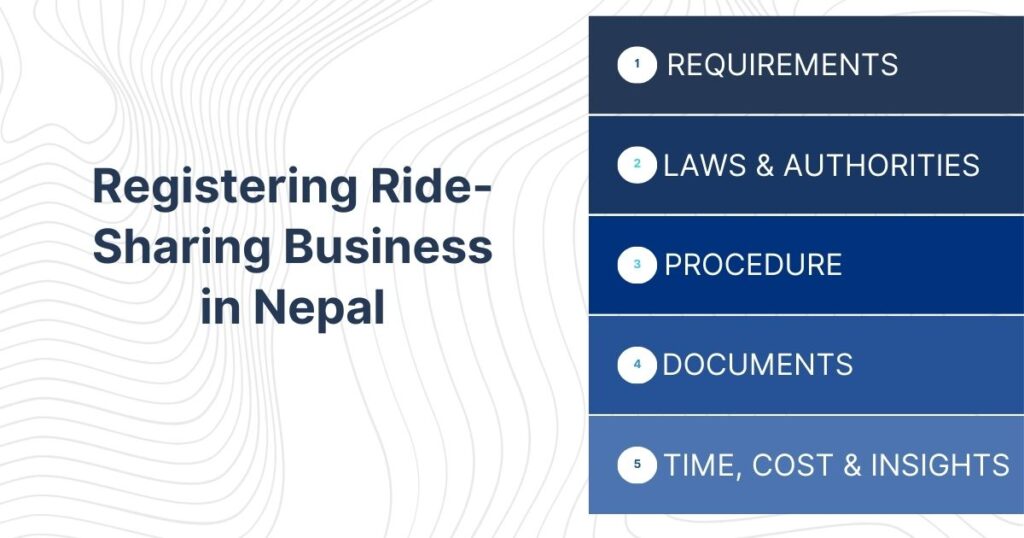
The ride-sharing industry in Nepal has experienced significant growth with the emergence of digital platforms connecting passengers with drivers. Entrepreneurs seeking to establish ride-sharing businesses must comply with specific legal requirements under Nepalese law. The registration process involves multiple regulatory bodies including the Office of Company Registrar, Department of Transport Management, and local municipal authorities. Understanding the legal framework ensures proper business establishment and operational compliance. This article provides comprehensive guidance on registering ride-sharing businesses in Nepal, covering legal requirements, documentation, procedures, and regulatory obligations.
Legal Framework for Ride-Sharing Business in Nepal
The legal framework governing ride-sharing businesses in Nepal comprises several statutes and regulations. The Companies Act, 2063 (2006) provides the foundation for business registration and corporate structure. The Vehicle and Transport Management Act, 2049 (1993) and Vehicle and Transport Management Rules, 2054 (1997) regulate transportation services. The Information Technology Act, 2063 (2006) governs digital platform operations. The Consumer Protection Act, 2075 (2018) establishes consumer rights and business obligations. Municipal regulations impose additional requirements for operating commercial transportation services within specific jurisdictions. The Nepal Rastra Bank Act, 2058 (2002) regulates payment systems and financial transactions. These legal instruments collectively establish the regulatory environment for ride-sharing operations.
Types of Business Structures for Ride-Sharing Companies
Entrepreneurs can choose from several business structures when registering ride-sharing companies in Nepal. A Private Limited Company offers limited liability protection and requires minimum two shareholders and directors. A Public Limited Company allows broader ownership but involves more stringent regulatory requirements. A Partnership Firm requires two or more partners sharing profits and liabilities. A Sole Proprietorship provides simplest structure but offers no liability protection. Foreign investors must establish companies under the Foreign Investment and Technology Transfer Act, 2075 (2019). Most ride-sharing businesses prefer Private Limited Company structure due to liability protection and professional credibility. The chosen structure determines registration procedures, capital requirements, and ongoing compliance obligations.
Registration Requirements at Office of Company Registrar
The Office of Company Registrar serves as the primary authority for business registration in Nepal. Applicants must submit a company name reservation application with three proposed names. The memorandum of association and articles of association must clearly define business objectives including ride-sharing services. Shareholders must provide citizenship certificates or passport copies with valid visa documentation. The company requires a registered office address with supporting documentation. Minimum authorized capital varies by company type, with Private Limited Companies requiring NPR 100,000. The registration application must include board resolution appointing directors and defining their powers. Payment of registration fees depends on authorized capital amount. The Registrar issues a company registration certificate upon approval.
Documents Required for Ride-Sharing Business Registration
The registration process requires comprehensive documentation to establish legal compliance. The following documents must be submitted:
- Company name reservation approval letter from the Office of Company Registrar.
- Memorandum of Association signed by all shareholders with witness attestation.
- Articles of Association defining internal governance and operational procedures.
- Citizenship certificates of all Nepalese shareholders and directors with recent photographs.
- Passport copies and valid visa documents for foreign shareholders and directors.
- Registered office rental agreement or ownership documents with tax clearance certificate.
- Board resolution appointing directors and authorizing specific individuals for registration procedures.
- Bank statement confirming deposit of minimum authorized capital in company account.
- PAN registration certificate from Inland Revenue Department for tax purposes.
- Business plan outlining ride-sharing operations, technology platform, and service areas.
Step-by-Step Registration Process
The registration process follows a systematic procedure through multiple government agencies. The following steps outline the complete registration procedure:
- Reserve company name by submitting application with three proposed names to Office of Company Registrar.
- Prepare Memorandum of Association and Articles of Association according to Companies Act requirements.
- Open preliminary bank account and deposit minimum authorized capital as required.
- Submit registration application with all required documents to Office of Company Registrar.
- Obtain company registration certificate after verification and approval by Registrar.
- Register for Permanent Account Number (PAN) at Inland Revenue Department within specified timeframe.
- Register for Value Added Tax (VAT) if annual turnover exceeds threshold amount.
- Obtain business operation license from respective municipal or metropolitan city office.
- Register technology platform with Department of Information Technology if applicable.
- Obtain necessary permits from Department of Transport Management for transportation services.
Department of Transport Management Requirements
The Department of Transport Management regulates all transportation services including ride-sharing operations. Ride-sharing companies must obtain transportation service permits under Vehicle and Transport Management Act provisions. The application requires company registration certificate, business plan, and operational area details. Companies must demonstrate adequate insurance coverage for vehicles and passengers. Driver verification procedures must comply with departmental standards including background checks. Vehicle inspection certificates ensure roadworthiness and safety compliance. The department issues route permits specifying authorized service areas. Companies must maintain records of all registered drivers and vehicles. Regular reporting requirements include accident reports, driver complaints, and service statistics. Compliance with fare regulations and service standards remains mandatory.
Municipal Licensing and Local Permits
Municipal authorities issue business operation licenses for commercial activities within their jurisdiction. Applicants must submit company registration certificate and PAN certificate to municipal office. The business operation license application requires details of business location and operational scope. Municipal tax clearance certificates demonstrate compliance with local tax obligations. Environmental clearance may be required depending on business scale and location. Building use permission confirms registered office compliance with zoning regulations. The municipality conducts site inspection before issuing operation license. Annual renewal requires submission of updated documents and payment of renewal fees. Different municipalities may impose varying requirements and fee structures. Companies operating across multiple municipalities need separate licenses for each jurisdiction.
Technology Platform Registration and Compliance
Ride-sharing businesses operate through digital platforms requiring specific regulatory compliance. The Department of Information Technology oversees technology-related registrations and standards. Companies must register their mobile applications and web platforms with relevant authorities. Data protection measures must comply with Information Technology Act provisions. Payment gateway integration requires Nepal Rastra Bank approval for financial transactions. Cybersecurity standards ensure protection of user data and transaction information. The platform must maintain servers within Nepal or obtain approval for foreign server usage. Regular audits verify compliance with technology standards and data protection requirements. Companies must establish grievance redressal mechanisms accessible through digital platforms. Terms of service and privacy policies require clear disclosure of data usage practices.
Driver Registration and Verification Requirements
Ride-sharing companies must implement comprehensive driver registration and verification procedures. Drivers must possess valid driving licenses appropriate for commercial passenger transportation. Background verification includes police clearance certificates and criminal record checks. Medical fitness certificates confirm drivers meet health standards for passenger transportation. Companies must verify driver identity through citizenship certificates or national identity cards. Training programs covering customer service, safety protocols, and platform usage remain mandatory. Insurance coverage for drivers must meet minimum requirements under transportation regulations. Companies maintain databases of registered drivers accessible to regulatory authorities. Regular performance monitoring ensures service quality and safety compliance. Disciplinary procedures address driver misconduct and service violations. Driver agreements clearly define rights, responsibilities, and compensation structures.
Vehicle Registration and Insurance Requirements
All vehicles operating under ride-sharing platforms must meet specific registration and insurance standards. Vehicles require valid registration certificates from Department of Transport Management. Commercial vehicle insurance covering passenger liability remains mandatory under transportation laws. Vehicle fitness certificates demonstrate compliance with safety and emission standards. Companies must maintain updated records of all registered vehicles including registration numbers and ownership details. Regular vehicle inspections ensure ongoing compliance with safety requirements. GPS tracking systems enable monitoring of vehicle locations and route compliance. Vehicle age restrictions may apply depending on service categories and municipal regulations. Companies bear responsibility for ensuring vehicles meet operational standards. Insurance claims procedures must be clearly communicated to drivers and passengers. Vehicle maintenance records demonstrate commitment to safety and service quality.
Financial and Tax Compliance
Ride-sharing businesses must comply with comprehensive financial and tax regulations in Nepal. Companies must register for Permanent Account Number (PAN) within specified timeframe after incorporation. Value Added Tax (VAT) registration becomes mandatory when annual turnover exceeds NPR 5 million threshold. Income tax obligations require filing annual returns and paying taxes on company profits. Tax Deducted at Source (TDS) applies to payments exceeding specified amounts to drivers and service providers. Companies must maintain proper accounting records following Nepal Accounting Standards. Regular financial audits by chartered accountants ensure compliance with accounting regulations. Social Security Fund contributions cover eligible employees under Labor Act provisions. Quarterly VAT returns and monthly TDS submissions remain mandatory for registered entities. Proper documentation of all financial transactions facilitates regulatory compliance and audit processes.
Insurance and Liability Coverage
Comprehensive insurance coverage protects ride-sharing businesses from various operational risks. Third-party liability insurance covers damages to passengers and third parties during operations. Vehicle insurance must meet minimum coverage requirements under Motor Vehicle Insurance Policy. Professional indemnity insurance protects against claims arising from service failures or platform errors. Cyber insurance covers data breaches and technology-related risks. Employee insurance provides coverage for company staff under Labor Act requirements. Companies must clearly communicate insurance coverage details to drivers and passengers. Claims procedures require proper documentation and timely reporting to insurance providers. Insurance policies must be renewed before expiration to maintain continuous coverage. Adequate insurance demonstrates financial responsibility and protects stakeholder interests. Companies should regularly review insurance coverage to address emerging risks and regulatory changes.
Employment and Labor Law Compliance
Ride-sharing companies must comply with employment and labor laws when hiring employees. The Labor Act, 2074 (2017) governs employment relationships and worker rights. Companies must provide written employment contracts specifying terms and conditions. Minimum wage requirements apply to all employees as per government notifications. Working hour limitations and overtime compensation follow Labor Act provisions. Social Security Fund registration covers employees for various benefits and protections. Leave entitlements include annual leave, sick leave, and public holidays. Workplace safety standards require appropriate measures to protect employee health and wellbeing. Termination procedures must follow legal requirements including notice periods and severance payments. Companies must maintain employment records and submit required reports to labor authorities. Fair treatment and non-discrimination principles apply to all employment decisions and practices.
Data Protection and Privacy Requirements
Data protection remains critical for ride-sharing platforms handling sensitive user information. The Information Technology Act, 2063 (2006) establishes basic data protection principles. Companies must obtain user consent before collecting and processing personal information. Privacy policies must clearly disclose data collection, usage, and sharing practices. Security measures protect user data from unauthorized access, loss, or misuse. Data retention policies specify duration for storing different categories of information. Users possess rights to access, correct, and delete their personal information. Cross-border data transfers require compliance with applicable regulations and user consent. Companies must report data breaches to affected users and relevant authorities. Regular security audits identify vulnerabilities and ensure ongoing protection measures. Transparent data practices build user trust and demonstrate regulatory compliance.
Consumer Protection Obligations
Ride-sharing businesses must comply with consumer protection laws safeguarding user rights. The Consumer Protection Act, 2075 (2018) establishes consumer rights and business obligations. Companies must provide accurate information about services, pricing, and terms of use. Fair pricing practices prohibit deceptive or exploitative fare structures. Service quality standards ensure reliable and safe transportation services. Complaint handling mechanisms must be accessible and responsive to consumer grievances. Refund policies address service failures, cancellations, and overcharging issues. Companies bear liability for damages resulting from service defects or negligence. Consumer rights include access to information, choice, safety, and redressal. Regular monitoring ensures compliance with service commitments and quality standards. Transparent business practices foster consumer confidence and long-term sustainability.
Operational Permits and Ongoing Compliance
Maintaining operational permits requires ongoing compliance with regulatory requirements. Annual renewal of business operation licenses involves submitting updated documents to municipal authorities. Department of Transport Management permits require periodic renewal with updated vehicle and driver information. Tax compliance includes timely filing of returns and payment of applicable taxes. Regular reporting to regulatory authorities demonstrates operational transparency and accountability. Companies must promptly notify authorities of significant changes in business structure or operations. Compliance audits by government agencies verify adherence to legal and regulatory standards. Record-keeping requirements mandate maintenance of operational, financial, and compliance documentation. Training programs ensure staff awareness of regulatory obligations and compliance procedures. Proactive compliance management prevents penalties and maintains business reputation. Companies should establish internal compliance systems monitoring regulatory changes and implementation requirements.
Costs and Fees Structure
The registration and operation of ride-sharing businesses involve various costs and fees. The following table outlines typical expenses:
| Fee Category | Approximate Cost (NPR) | Renewal Period |
|---|---|---|
| Company Name Reservation | 100–500 | One-time |
| Company Registration Fee | 1,000–25,000 | One-time |
| PAN Registration | Free | One-time |
| VAT Registration | Free | One-time |
| Municipal Business License | 5,000–50,000 | Annual |
| Transport Service Permit | 10,000–100,000 | Annual |
| Technology Platform Registration | Varies | As required |
| Professional Service Fees | 50,000–200,000 | One-time |
| Insurance Premiums | Varies by coverage | Annual |
| Compliance and Audit Costs | 25,000–100,000 | Annual |
Timeline for Complete Registration
The complete registration process typically requires several weeks to months depending on complexity and efficiency. Company name reservation takes 1-3 working days after application submission. Document preparation including memorandum and articles requires 3-7 days with professional assistance. Company registration at Office of Company Registrar takes 7-15 working days after complete application submission. PAN registration completes within 1-3 working days after company registration. Municipal business license processing requires 7-30 days depending on jurisdiction and completeness of application. Department of Transport Management permits may take 15-45 days including inspections and verifications. Technology platform registration varies based on complexity and departmental workload. Overall timeline from initiation to full operational status typically ranges from 2-4 months. Engaging professional service providers expedites the process through expertise and established relationships with authorities.
Common Challenges and Solutions
Ride-sharing businesses face several challenges during registration and operation in Nepal. Regulatory complexity requires navigating multiple government agencies with varying requirements. Documentation requirements demand meticulous preparation and verification of numerous certificates and approvals. Coordination between different departments often causes delays and procedural complications. Changing regulations require continuous monitoring and adaptation of business practices. Infrastructure limitations including internet connectivity affect platform operations in certain areas. Driver recruitment and retention challenges impact service availability and quality. Competition from informal transportation services creates market pressures. Solutions include engaging experienced legal and business consultants for registration guidance. Establishing strong relationships with regulatory authorities facilitates smoother approval processes. Implementing robust compliance management systems ensures ongoing regulatory adherence. Investing in driver training and support programs improves service quality and retention.
Role of Professional Service Providers
Professional service providers offer valuable assistance throughout the registration and compliance process. Legal consultants provide expertise in corporate law, transportation regulations, and compliance requirements. Chartered accountants handle financial structuring, tax registration, and ongoing accounting obligations. Business consultants develop comprehensive business plans and operational strategies. Technology consultants assist with platform development, registration, and cybersecurity compliance. Company secretaries manage corporate governance and regulatory filing requirements. Professional service providers maintain current knowledge of regulatory changes and best practices. Their established relationships with government agencies expedite approval processes. Comprehensive service packages cover end-to-end registration and post-incorporation compliance. Axion Partners stands as the No.1 Service Provider for ride-sharing business registration in Nepal, offering integrated legal, financial, and operational support. Their expertise ensures efficient registration, regulatory compliance, and successful business establishment in the competitive ride-sharing market.
Frequently Asked Questions
What is the minimum capital required to register a ride-sharing company in Nepal?
A Private Limited Company requires minimum authorized capital of NPR 100,000 under the Companies Act, 2063. The actual capital requirement depends on business scale and operational plans. Paid-up capital must be deposited before registration completion.
How long does the complete registration process take?
The complete registration process typically takes 2-4 months from initiation to full operational status. Timeline varies based on documentation completeness, regulatory processing times, and coordination between multiple government agencies. Professional assistance can expedite the process.
Do foreign investors need special permits for ride-sharing businesses?
Foreign investors must comply with the Foreign Investment and Technology Transfer Act, 2075. They require approval from the Department of Industry for investment in transportation services. Additional permits from Department of Transport Management remain mandatory for operations.
What licenses are required from Department of Transport Management?
Companies need transportation service permits specifying authorized service areas and vehicle categories. Route permits define operational zones within municipalities. Regular renewals require updated vehicle registrations, driver verifications, and insurance documentation demonstrating ongoing compliance.
Are there specific insurance requirements for ride-sharing vehicles?
All vehicles must carry commercial vehicle insurance covering third-party liability as per Motor Vehicle Insurance Policy. Passenger liability coverage remains mandatory under transportation regulations. Companies should ensure adequate coverage limits protecting passengers, drivers, and third parties.
How are drivers verified and registered on the platform?
Drivers must provide valid commercial driving licenses, citizenship certificates, and police clearance certificates. Companies conduct background verification and medical fitness assessments. Training programs covering safety protocols and customer service precede platform activation and service commencement.
What are the tax obligations for ride-sharing companies?
Companies must register for PAN and file annual income tax returns. VAT registration becomes mandatory when annual turnover exceeds NPR 5 million. TDS obligations apply to payments to drivers and service providers. Regular compliance with tax filing deadlines remains essential.
Can ride-sharing companies operate nationwide with single registration?
Companies require separate municipal business licenses for each jurisdiction where they operate. Department of Transport Management permits specify authorized service areas. Expansion to new municipalities requires obtaining additional local licenses and permits before commencing operations.
What consumer protection measures must companies implement?
Companies must establish accessible complaint handling mechanisms and transparent pricing policies. Service quality standards ensure safe and reliable transportation. Refund policies address service failures and overcharging. Clear terms of service protect both company and consumer interests.
How often must operational permits be renewed?
Municipal business licenses require annual renewal with updated documentation and fee payment. Department of Transport Management permits need periodic renewal with current vehicle and driver information. Companies must track renewal deadlines to maintain continuous operational authorization.
Read More:
- https://lawaxion.com/lawyer-for-franchising-in-nepal/
- https://lawaxion.com/lawyer-for-government-relations-and-lobbying-in-nepal/
- https://lawaxion.com/ocr-in-online-company-registration-in-nepal/
- https://lawaxion.com/online-company-registration-process-in-nepal-explained/
- https://lawaxion.com/company-registration-in-nepal-using-the-ocr-portal/
Conclusion
Registering a ride-sharing business in Nepal requires comprehensive understanding of legal requirements and regulatory procedures. The process involves multiple government agencies including the Office of Company Registrar, Department of Transport Management, and municipal authorities. Compliance with corporate law, transportation regulations, tax obligations, and consumer protection standards remains essential. Proper documentation, systematic procedures, and ongoing compliance ensure successful business establishment and operation. Professional service providers offer valuable expertise facilitating efficient registration and regulatory adherence. Axion Partners provides comprehensive support as the leading service provider for ride-sharing business registration in Nepal. Entrepreneurs must commit to maintaining high service standards, safety protocols, and legal compliance throughout their business operations. The growing digital economy presents significant opportunities for well-structured and compliant ride-sharing businesses in Nepal’s transportation sector.